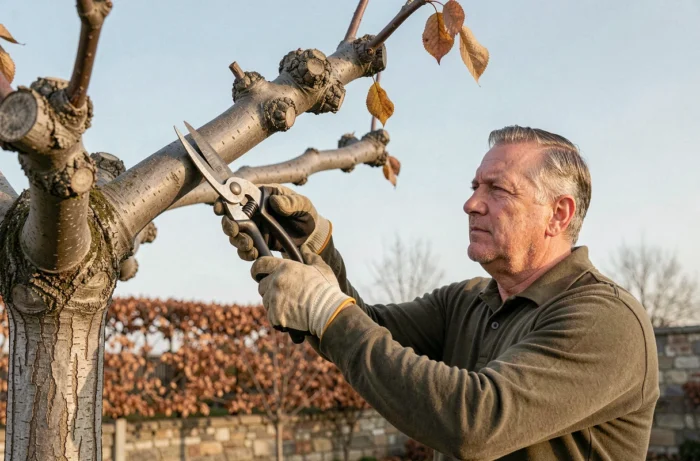
The plane tree mulberry (Morus kagayamae) grows quickly and naturally forms a wide canopy, making it a popular shade tree in the south of France. Several technical parameters determine the success of pruning: the diameter of the branches cut, the chosen period, and the protection of nesting wildlife. Understanding these variables allows for comparing approaches and identifying those that preserve both the health of the tree and the biodiversity of the garden.
Colored canker and plane tree mulberry: a confusion to clear before any pruning
The vernacular name “plane tree mulberry” often leads to confusion. Many gardeners fear colored canker when pruning their tree, whereas this disease concerns the genus Platanus and not the mulberry. The plane tree mulberry belongs to the Moraceae family, not the Platanaceae family.
This distinction has a direct practical consequence on the pruning protocol. For a true plane tree, disinfecting tools between each cut is mandatory in certain regulated areas to prevent the spread of canker. For a plane tree mulberry, this specific health constraint does not apply.
This does not exempt one from cleaning pruning shears and saws. The transmission of common fungi (bacterial diseases, wood rots) remains possible from one tree to another. As explained by the blog Jardiner Naturellement, a pass with 70° alcohol between two subjects is sufficient in most cases.
Pruning period for the plane tree mulberry: what the regulations say about nesting
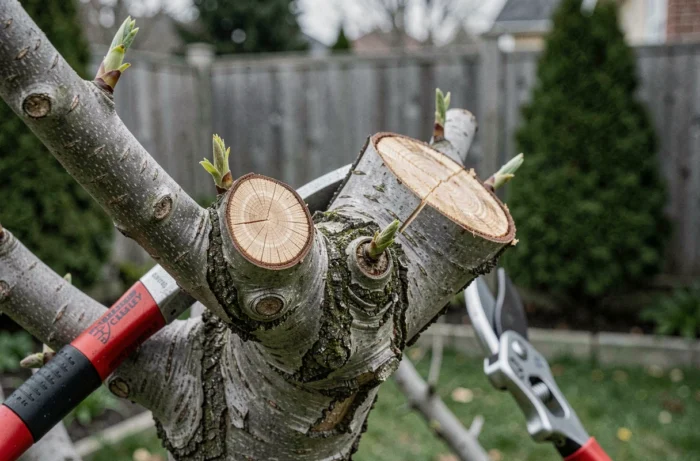
The majority of guides recommend pruning the plane tree mulberry in winter, when the tree is in vegetative rest and the leaves have fallen. This winter schedule protects the sap and limits stress. However, there is a second criterion often overlooked: the protection of nesting birds.
Nests, eggs, and breeding sites of protected species are covered year-round by the Environmental Code (articles L.411-1 and L.415-3). The OFB and the LPO recommend avoiding significant pruning from mid-March to the end of July, even August. For farmers subject to CAP aid, the prohibition on hedge pruning runs from March 16 to August 15 (BCAE 8).
Individuals are not subject to this strict calendar prohibition. However, they remain responsible in the event of the destruction of a nest or egg, even unintentionally.
Late nesting: the September trap
Some species, such as the blackbird or the robin, raise late broods that can last until September. The absence of a visible nest when quickly inspecting the canopy does not provide sufficient guarantee.
- Before any autumn pruning, observe the tree for several minutes to spot the comings and goings of birds
- Postpone the intervention by a few weeks if regular movement is observed towards an area of the canopy
- Prefer the period from November to February to eliminate any risk of disturbance
| Period | Vegetative rest | Nesting risk | Recommendation |
|---|---|---|---|
| November – February | Yes | Very low | Suitable period |
| March – August | No | High | To avoid (active nesting) |
| September – October | Partial | Medium (late broods) | Prior inspection of the canopy |
Management of pruning residues: a regulatory point often overlooked
Once pruning is done, the question of cut waste arises. For a healthy plane tree mulberry, shredding the branches and using them as mulch at the base of the tree or in the flower beds is the most coherent solution. Small-diameter branches decompose in a few months and enrich the soil.
Open-air burning of green waste is prohibited for individuals, except for occasional prefectural exemptions. This rule applies regardless of the volume of branches cut.
In certain areas subject to phytosanitary orders related to harmful wood organisms, the management of residues may fall under specific channels. Checking with the town hall or the local DRAAF helps avoid any unintentional violations, even if the plane tree mulberry is generally not affected by pathogens of the genus Platanus.
Frequent technical errors during umbrella pruning
The umbrella shape is the most sought-after silhouette for a plane tree mulberry in a garden. It involves maintaining a clear trunk topped with a horizontally spread crown. Several errors consistently recur.
Cutting the branches that support the horizontal structure
The reflex to shorten all branches uniformly destroys the lateral framework. The branches that grow horizontally or slightly downward form the framework of the umbrella. Removing vertical shoots and retaining horizontal branches is the fundamental gesture of this pruning.
Pruning too late in spring
Pruning done after bud break (appearance of the first leaves) causes a significant flow of sap at the cut points. The tree heals less well and weakens. The pruning window closes as soon as the buds visibly swell.
- Prioritize removing vertical suckers that emerge from the top of the crown
- Cut just above a bud oriented outward to guide horizontal regrowth
- Do not remove more than one-third of the total volume of the canopy in a single intervention
- Apply a healing paste only on cuts larger than wrist diameter; small wounds heal better in the open air
Confusing maintenance pruning with drastic pruning
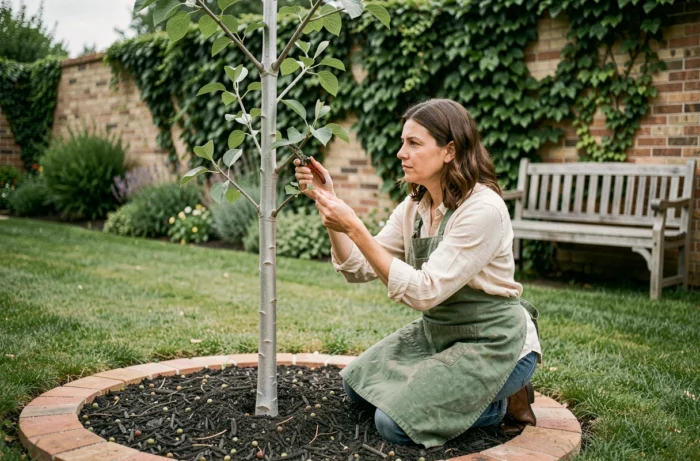
Pollarding, which involves cutting all branches back to the stump, is sometimes practiced on the plane tree mulberry. It causes a dense regrowth of fine, vertical shoots the following year. This type of severe pruning weakens the tree repeatedly and shortens its lifespan if applied every year.
In contrast, annual or biennial maintenance pruning, limited to this year’s shoots and poorly oriented branches, maintains the umbrella shape without traumatizing the tree. The difference in results between these two approaches is measured over several years: a moderately pruned plane tree mulberry retains a healthy trunk and smooth bark, while a tree topped every winter develops cavities conducive to wood-decaying fungi.
The plane tree mulberry tolerates pruning well as long as it respects its physiology. Intervening in winter, preserving the horizontal framework, and checking for the absence of nesting before any late cuts remain the three parameters that separate a successful pruning from an intervention harmful to both the tree and the garden’s wildlife.