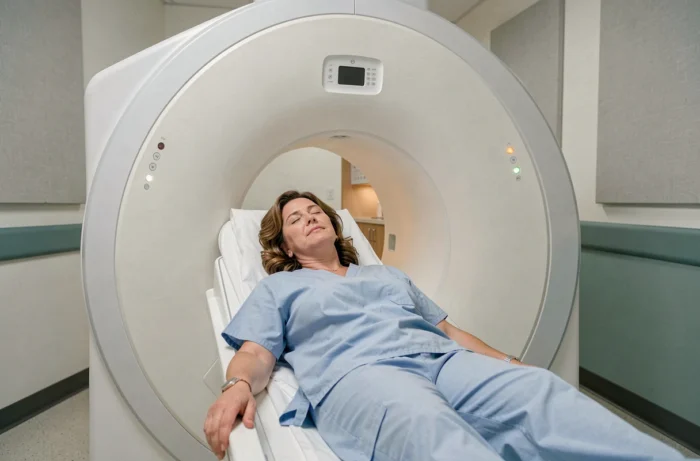
Undergoing an MRI when you fear confined spaces is often a source of anxiety well before the day of the appointment. Open MRI represents a concrete alternative for claustrophobic patients today, with a machine designed to reduce the feeling of confinement. However, it is essential to understand what truly distinguishes this technology from a classic tunnel, and how to prepare for the exam to experience it calmly.
Open MRI or expanded tunnel: two machines, two sensations
Have you ever seen photos of “open” MRIs online? The term actually covers two very different configurations. A truly open machine allows the patient to lie between two horizontal plates, without side walls. An expanded tunnel machine, on the other hand, retains a cylindrical shape but with a more generous diameter.
The difference in sensation is notable. In an expanded tunnel, the face remains relatively close to the upper wall. The open machine, however, completely frees the sides of the body. For a claustrophobic patient, this distinction changes everything.
Before booking a slot, it is helpful to ask the radiology center what type of machine they use. The word “open” on a website does not guarantee a laterally clear configuration. A quick call is enough to clarify this point and avoid an unpleasant surprise on the day. Many patients also share their experience of open MRI for claustrophobics and confirm that asking the question in advance makes all the difference.
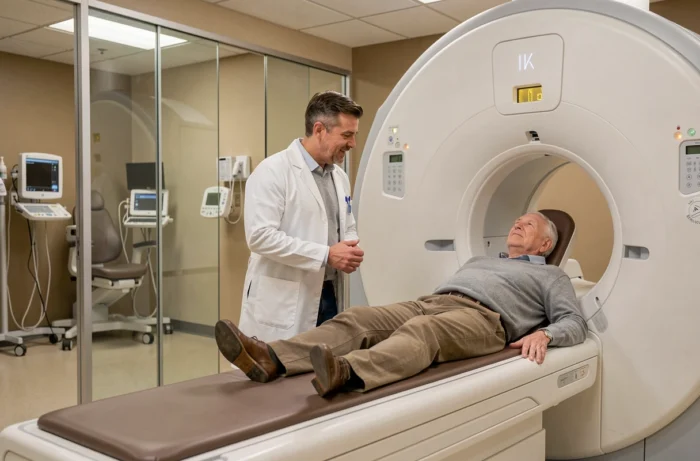
Image quality of open MRI: what the radiologist must validate
An open machine provides more comfort, but the choice also depends on the prescribed examination. Image quality varies depending on the system used and the area of the body to be explored. For certain indications, particularly the search for very small anomalies, the radiologist may determine that a classic high-field tunnel remains preferable.
In practical terms, this means that one should not choose alone between comfort and diagnostic performance. The right reflex is to discuss it with the prescribing physician before making an appointment. If the open MRI is suitable for the requested exam, the radiologist will give the green light. Otherwise, they may suggest intermediate solutions (expanded tunnel, light sedation) to ensure the exam remains feasible.
A report from France 3 aired on September 30, 2026, features an open field machine installed in Hauts-de-France. This system uses artificial intelligence to compensate for the image limitations typically associated with open machines. This type of installation is still relatively rare, but the offering is progressing in France, particularly for claustrophobic patients, children, and people with disabilities.
Testimonials from claustrophobic patients: what really helped
Feedback from patients who have taken the plunge for an MRI despite their claustrophobia converges on a few concrete points. The testimony collected by France 3 summarizes the feeling well: one patient compares the classic MRI to “entering a coffin,” while the open machine transformed their experience of the exam.
What comes up most often in the testimonials is not a miracle trick. It is the combination of several simple elements:
- Visiting the center before the day of the exam allows you to discover the room, the machine, and ask questions to the staff. This familiarization significantly reduces anticipatory anxiety.
- Requesting to maintain constant vocal contact with the radiology technician during the exam. Knowing that you can talk, signal discomfort, or ask for a break reassures much more than a simple alert button.
- Using slow breathing techniques (inhaling for four counts, exhaling for six counts) during the acquisition. Several patients report that this focus on breathing effectively distracts from the noise and the confined space.
The question of sedation before the exam
Some patients request a sedative before the MRI. This option exists and can be discussed with the treating physician or the radiologist. A light anxiolytic, taken according to medical instructions, can be enough to make the exam bearable when stress management techniques are insufficient.
Sedation does not replace mental preparation, but it can usefully complement other strategies. The point not to neglect: inform the center in advance, as taking a sedative means not driving after the exam.
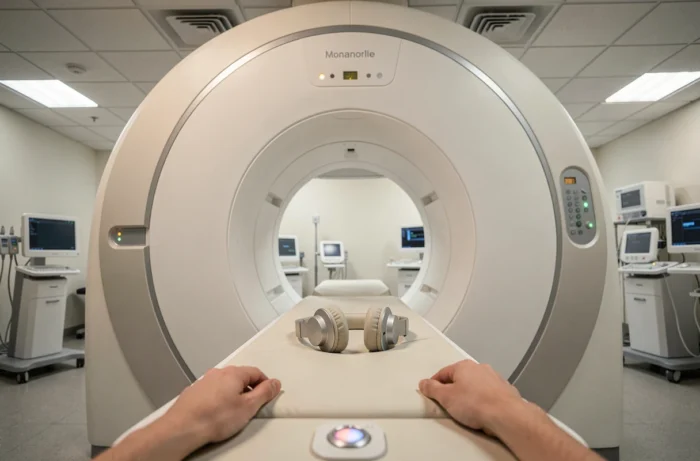
Preparing for your MRI when you are claustrophobic: concrete steps
Preparation begins well before the day of the appointment. Here’s what works, according to patient feedback and recommendations from medical imaging centers:
- Call the center to ask about the type of machine (open, expanded tunnel, standard tunnel) and to mention your claustrophobia at the time of booking.
- Ask the prescribing physician if the exam is compatible with an open machine. A five-minute exchange can prevent an interrupted exam.
- Practice some controlled breathing exercises in the days leading up to the exam, ideally while lying down, to partially recreate the conditions.
- On the day, wear comfortable clothing without metal elements, and arrive early to avoid adding logistical stress to existing anxiety.
The staff at imaging centers are accustomed to supporting anxious patients. Mentioning your fear is nothing to be embarrassed about: it is, on the contrary, the best way to obtain appropriate support, with breaks if necessary and an adjusted exam pace.
An exam interrupted by an anxiety attack will need to be rescheduled, which prolongs the diagnostic process. Investing time in preparation beforehand remains the most effective strategy to ensure the MRI proceeds in a single session, under acceptable conditions for both the patient and the medical team.