
A sofa whose seat sagged after two years, a coffee table that warps after the first humid summer: the problem rarely comes from poor maintenance, but rather from a choice of material or assembly that was inadequate from the start. Choosing stylish and durable furniture means looking beyond the displayed style to understand what makes a piece of furniture last over time.
Wood Certifications and Traceability: What Distinguishes Durable Furniture from Disposable Furniture
The 2026 trend towards dark wood (walnut, smoked oak, wenge) is not just a passing fad. It accompanies a demand for traceability driven by the FSC and PEFC labels, which guarantee sustainable management of the source forests. A certified solid wood piece of furniture is not only more durable than a melamine particle board: it carries a verifiable commitment throughout its production chain.
Have you ever noticed that two oak tables at the same price can age very differently? The difference often lies in the origin of the wood and the drying process. Certified oak, slowly dried in a kiln, deforms much less than imported wood without traceability that has been hastily dried. Checking for a label on the product sheet is the most reliable step before making a purchase.
Catalogs like the one offered on maison-du-meuble.fr allow you to filter by material and quickly spot solid wood pieces, simplifying this initial selection.
Assemblies and Finishes: The Technical Details That Affect Furniture Longevity
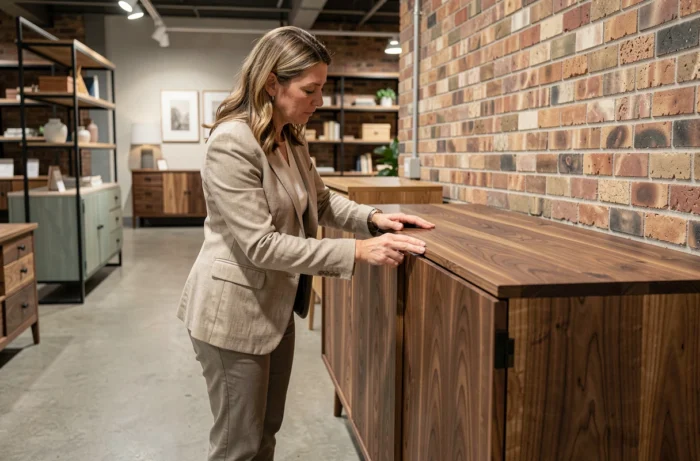
A piece of furniture can be made from noble wood and still prove fragile if the assembly is poorly done. Three points deserve particular attention at the time of purchase:
- Mortise and tenon or dovetail joints provide mechanical strength far superior to simple screws or staples, especially for storage furniture and tables subjected to regular loads.
- The edges (borders of tops and shelves) must be properly veneered, without misalignment or bubbles. A poorly glued edge will come apart in a few months and allow moisture to penetrate the panel.
- Surface finishes (varnish, oil, wax) protect the wood from stains and wear. A natural oil is easily renewed, while a polyurethane varnish withstands impacts better but is more difficult to repair in the event of deep scratches.
Why do these details matter so much? Because the durability of a piece of furniture hinges on the junction between two pieces of wood, not in the center of the panel. A quality joint doubles the useful life of the furniture.
The Case of Metal Legs
On a coffee table or TV unit, steel or aluminum cast legs provide stability and visual lightness. Check that the wood-metal junction uses threaded inserts rather than simple wood screws. Threaded inserts allow you to disassemble and reassemble the furniture without damaging the threading, which is important if you move or rearrange your interior.
Certified Dark Wood: The Code for Elegant Furniture in 2026
Living spaces are gradually shifting from light woods (bleached ash, natural pine) to darker species. Oiled walnut, smoked oak, or recycled wenge are becoming prominent in dining and living room collections. This aesthetic shift is supported by a concrete argument: certified dark wood combines luxurious aesthetics with environmental commitment.
A certified FSC walnut sideboard, for example, displays a patina that deepens over the years. The wood grains become more contrasted, whereas a laminate panel mimicking walnut loses its luster under the effects of light and repeated cleaning.
How to Integrate Dark Wood Without Overwhelming a Room
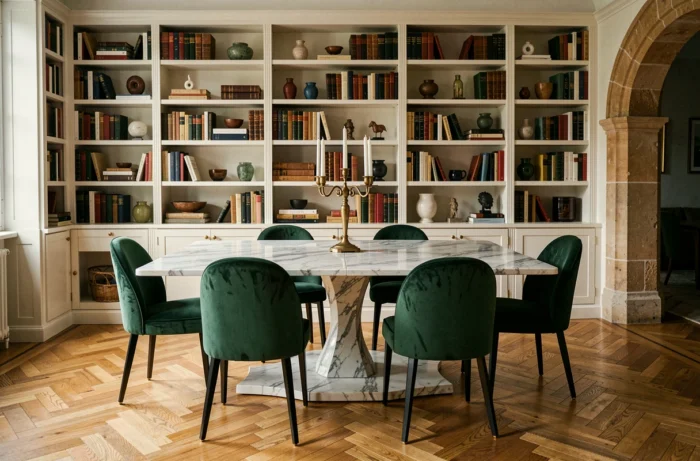
A room fully furnished in dark wood can appear oppressive, especially if natural light is limited. The most effective approach is to reserve dark wood for one or two focal pieces (dining table, storage unit) and balance it with light fabric seating or open shelves that allow the eye to flow.
Pairing a smoked oak top with a black metal base creates a graphic contrast without overcrowding the space. Limiting dark wood to two or three pieces of furniture per room is enough to add character to the living room or dining area.
Durability as a Starting Criterion: What Furniture Buyers Expect in 2026
Durability is no longer a secondary marketing argument. Furniture consumers now place longevity and reparability on the same level as style when making a purchase. This evolution changes the way offers are compared.
The European regulation on the right to repair reinforces this trend. The goal is to ensure access to spare parts and repair instructions to extend the life of products, including furniture. A repairable piece of furniture retains its value longer than a disposable one.
Concrete Guidelines for Assessing Durability Before Purchase
- Presence of an environmental label (FSC, PEFC) or mention of recycled wood on the product sheet.
- Announced availability of spare parts (legs, hinges, handles) from the manufacturer or distributor.
- Type of finish: a natural oil or wax can be renewed at home, while a laminate veneer cannot be repaired.
- Weight of the furniture: a solid wood piece weighs significantly more than a hollow panel equivalent, providing an immediate indicator of density and sturdiness.
Choosing elegant and durable furniture involves balancing three parameters: material, assembly, and the manufacturer’s ability to provide after-sales service. Style comes next, because a well-built piece in a noble wood remains beautiful when trends change. Investing in structure rather than trend remains the most cost-effective decision in the long run.